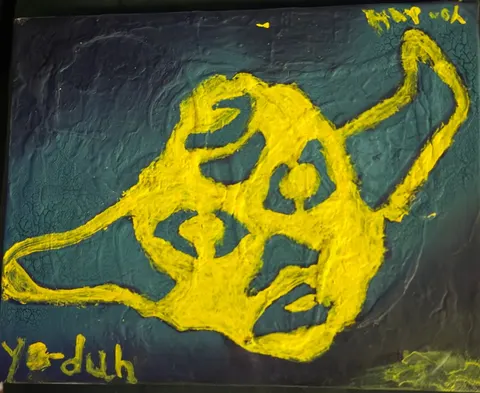
Pop art usually means a famous name: Lichtenstein’s Whaam! or Warhol’s Marilyn. Collectors who want the same spirit from an independent artist have to know how to read what they are buying. This guide covers the movement, how editions work, and Terry Bauer’s pop work.
What pop art is
Tate dates pop art to mid-1950s Britain and late-1950s America, peaking in the 1960s. Its artists took imagery from Hollywood, advertising, packaging, pop music and comic books. In the United States, Tate says, it returned to recognisable, hard-edged imagery and mundane subjects. In Britain it leaned on irony and parody.
In 1957 Richard Hamilton listed what he thought pop should be: popular, short-lived, disposable, cheap, mass-produced, witty and glamorous.
The names to know
Collecting guides name Andy Warhol and Roy Lichtenstein as defining American pop, with Hamilton as the key figure in Britain. Tate’s page pictures Warhol’s Marilyn Diptych of 1962 and Lichtenstein’s Whaam! of 1963.
Many of the best-known pop images are prints, which is why editions matter to collectors.
Dealers show it that way too. Sims Reed’s Pop Art in Print includes Warhol’s 1987 screenprint Moonwalk and Hamilton’s Fashion-plate.
Editions, posters and what collectors value
One collecting guide separates three things. A fine-art print made by the artist in a fixed edition can count as an original print. An open edition or poster re-creates an image with no fixed run. Collectors, it says, value authorised limited editions more than reproductions and posters.
On numbers, it says a low impression number such as 24 in an edition of 125 does not make a print worth more. Edition size, condition and provenance count for more.
It adds that provenance, the record of ownership, matters most for widely reproduced artists.
Pop art by Terry Bauer
Pop art is part of what he makes: pieces that borrow famous and popular images and remix them, as paintings, prints and posters.
His site does not name pop artists as influences, so this guide does not either. It reads his work against the movement’s habits: popular imagery, bold colour, and prints and posters made to be shared.
SF HEAD
SF HEAD is ten cartoon heads in red, blue and yellow, sold as a poster in four formats, two of them vinyl. It is a poster, so read it as one. See the formats on the SF HEAD page, and the vinyl-versus-paper guide for how to choose.
Yo/duh! and Positive Space
Yo/duh!, above, is a 10 × 8 in acrylic painting, a yellow alien face in thick paint on dark green. His site describes it as popular alien works reversed as sad and happy. Positive Space, two yellow eyes over orange and violet shapes on black, is a giclée print with its own page. Yo/duh! hangs with the paintings.
A Klimt clown
His Klimt giclées are limited editions, signed and numbered per order. The edition size is not on his site, so ask for it. In the clown version, a clown joins the embrace. The idea is old and very pop: take a famous picture and change it. The Klimt article follows that habit.
What to ask before you buy
With a living artist, you can ask which versions of an image exist and get the answer in writing. Start with these.
- Is this an original, a limited edition or an open-edition poster?
- For an edition: how many were made, and which number is mine?
- Is it signed, and will paperwork come with it?
- What paper or surface, and what size?
Keep whatever paperwork you get, because provenance is how a later buyer, or an insurer, learns what the piece is. Ask about the surface and size of each format too, as a poster and a painting are not hung the same way. The shop has the pieces on sale, and the inquiry page takes questions.