/ trust
Is Gig Safe? What Protects You, and What It Doesn't
A neighborhood post gives you a name and a phone number. Gig gives you a sign-in, a rating record, and a conversation you can leave. It does not give you a background check or a refund desk. Both halves matter.

The short answer: on Gig, you can see that an account is tied to Apple, Google, or an email address, read a rating that runs in both directions, and message inside the app before you share a phone number. You can block or report at any point. Gig does not run background checks, confirm a license or an insurance policy, or hold the payment. If a platform promises all of that, it is describing a different product.
That split is the useful one. "Safe" is usually marketing for a pile of things a company hopes you won't separate. Separate them.
What the app actually does
| Question | Gig does | Gig does not |
|---|---|---|
| Who is this account? | Sign-in with Apple, Google, or email | A government ID check or a background check |
| Have they done this before? | Two-way ratings after a job, weighted so one review can't outrank a real record | A guarantee that a new profile has a history |
| How do we talk? | In-app messages. Block or report anytime | Require your phone number before you know if they're free |
| Who holds the money? | You pay the person directly. Commission is 0% | Escrow, a wallet, or a refund if the job goes badly |
Sign-in is an account check, not a vetting
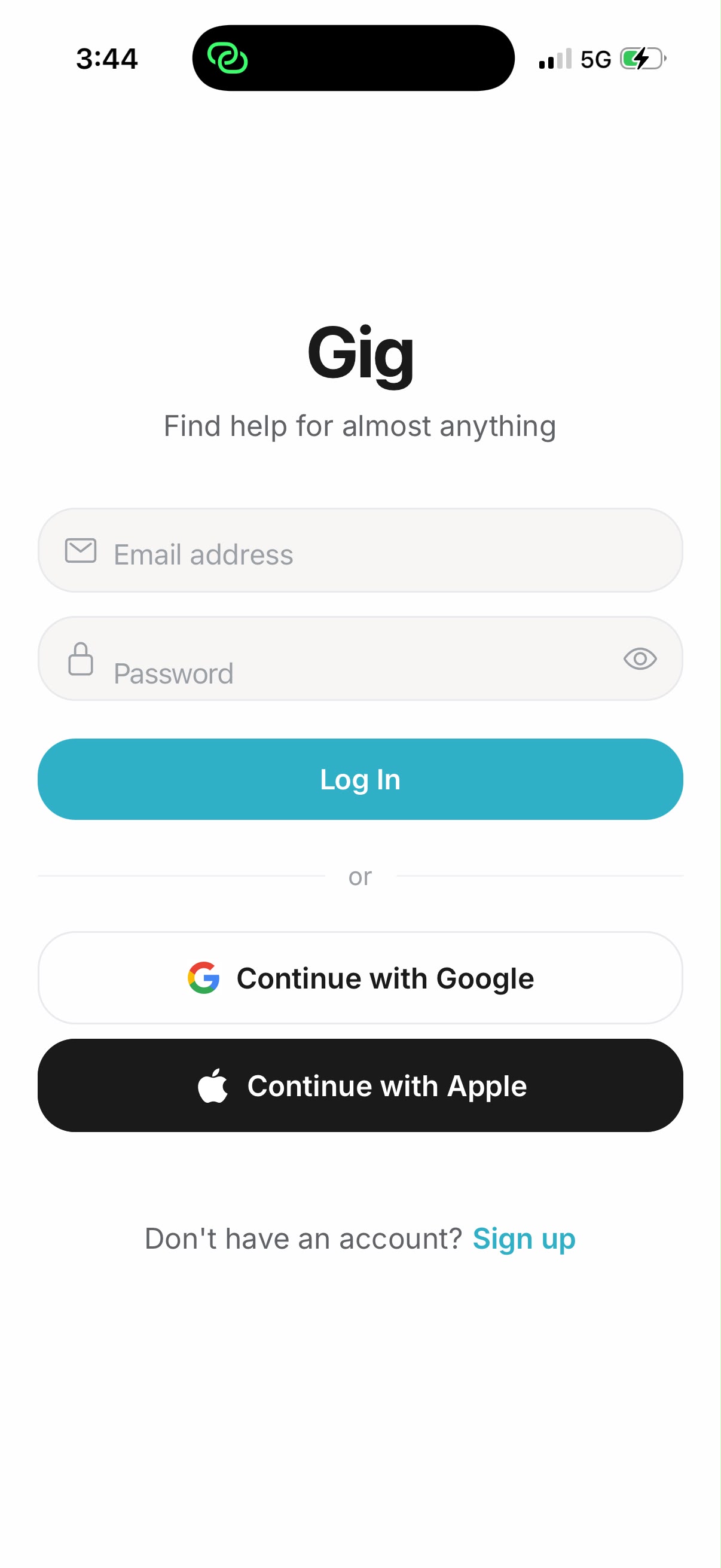
You can sign in with Apple, Google, or email. Apple and Google sign-in means the profile is attached to an account those companies already know. Apple's explanation of Sign in with Apple (opens in a new tab) is worth two minutes if you've never used the button, and Google's guide to sign-in security (opens in a new tab) covers what protects the Google side. An email sign-in is thinner. It proves someone can read that inbox. It does not prove a name, a trade, or a clean record.
Ratings run both ways
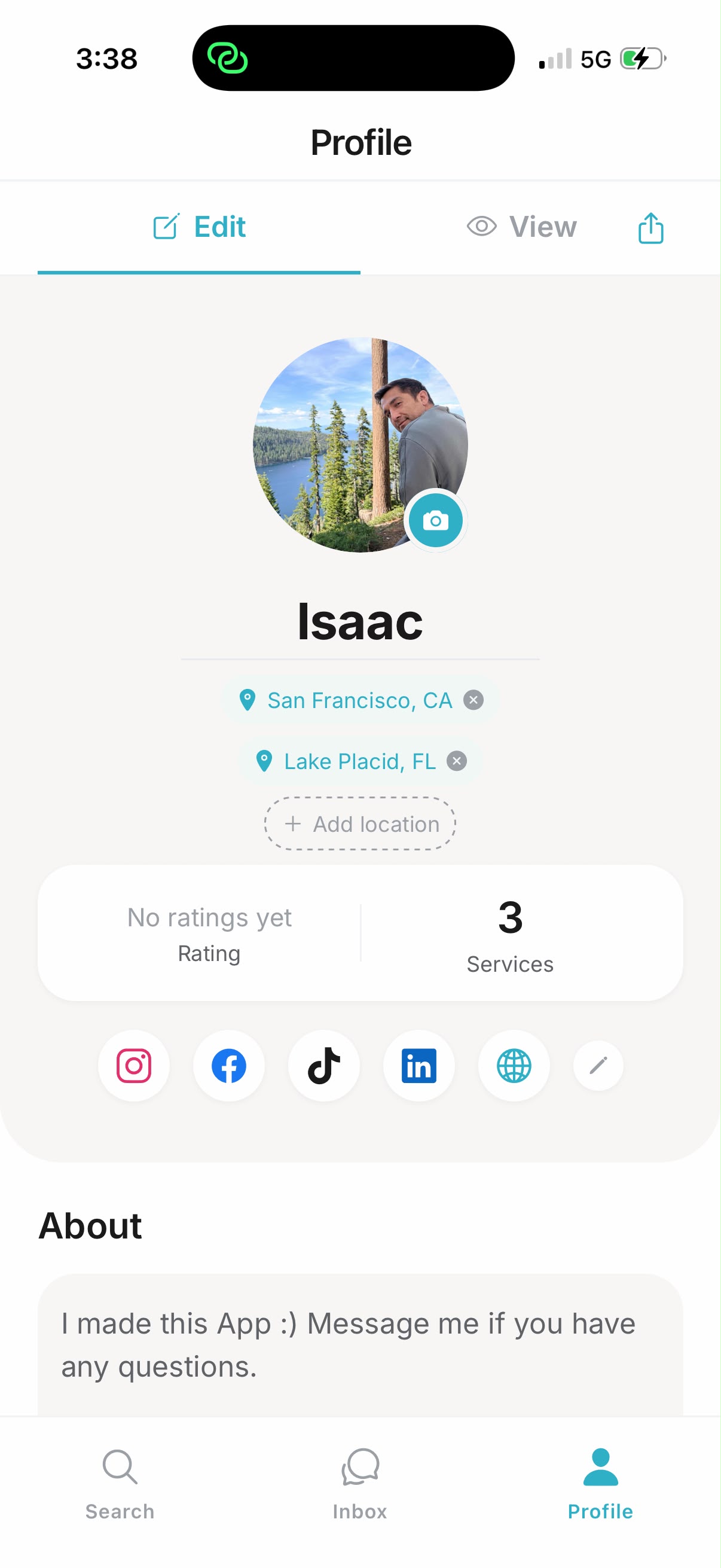
After a job, both people can leave a rating. That matters more for the person doing the work than the marketing usually admits: a customer builds a record the next provider can see, not only the other way around. A single 5.0 is still almost no information. Gig weights ratings by confidence, so one glowing review doesn't leapfrog someone with a real history. We wrote up the four signals that actually predict a decent job — rating and count together, distance, reply speed, and how specific the listing is — in how to find local help.
Message first. Share a number later, if at all
The risky moment in a neighborhood group is the first reply: you hand over a phone number to find out someone isn't free, and now a stranger has it anyway. On Gig the early conversation stays in the app. Ask whether they've done this exact job, what's included, and when they can actually start. If the tone is wrong, block or report and stop. You don't owe a thread a polite ending.
Keep the scope and the price in that thread. "$120, supplies included, Saturday morning" written down is a different agreement from the same words remembered differently a week later. It is not a contract review. It is a record of what you both said.
The payment is not a safety net
Gig has no in-app checkout, no wallet, and no escrow. Providers can list the handles they prefer — Venmo, Cash App, Zelle, PayPal — and you settle it between you, including cash. That is why the commission can be 0%: an app that never touches the payment can't take a slice of it. The other side of the same fact is that Gig cannot reverse a payment it never held.
Two outside sources are more useful here than a promise from us. The FTC's guide to avoiding a home improvement scam (opens in a new tab) is the checklist we won't pretend to replace: get the work in writing, don't pay the whole amount before anything has been done, be wary of pressure to decide on the spot, and for a licensed trade check the license with your state or county and ask for proof of insurance. And if you pay through a payment app, don't leave the money sitting in it — the CFPB's note on payment-app balances (opens in a new tab) explains why that balance is not the same thing as a bank account.
If money has already moved and the job was a scam, report it. ReportFraud.ftc.gov (opens in a new tab) is the FTC's front door for that. Blocking someone in Gig does not file that report for you.
Gig can make the introduction specific and give you a way out of the conversation. It cannot insure the job, and it does not hold the money.
A note on newness: Gig is newer than the big marketplaces, and a new profile has a thin record by definition. How many people you'll find also varies by area. A clear listing and a careful first message are the protection you actually have on day one — not a stack of reviews that aren't there yet.
Frequently asked
Is Gig safe to use?
Gig gives you a sign-in tied to Apple, Google, or email, a rating on both sides of a job, and messages that stay in the app until you decide to share anything else. You can block or report someone at any point. It does not run a background check, confirm a license or insurance policy, or hold the payment in escrow. Treat it as a better introduction than a phone number from a group chat, not as a guarantee.
Does Gig run background checks?
No. Sign-in with Apple or Google confirms the person has that account. It is not a government ID check and not a criminal-record check. Email sign-in is only an inbox. If a job needs a licensed tradesperson, ask for the license and check it with your state or county yourself.
Does Gig hold the money if a job goes wrong?
No. Gig has no checkout, no wallet, and no escrow. You pay the provider directly, which is also why the commission is 0%. Agree the scope and the price in the chat first, and don't pay the full amount before any work has happened. If money has already moved and something is wrong, report it to the FTC at ReportFraud.ftc.gov.
Can I block or report someone on Gig?
Yes. You can block or report at any point, and you can do it without handing over your phone number first, because the conversation starts in the app. Ratings also run both ways, so a customer builds a record the next provider can see, not only the other way around.
The rest of the decision
Safety is half of why people hesitate. The other half is whether the thing is a chore to use. That one is shorter: setup takes about a minute, and the booking is still a conversation after that. If you're on the working side and the question is how the first customer actually shows up, that's a separate post — including the part where you should not pay anyone for the chance to maybe get hired.