A collector reading a label that says “acrylic and encaustic wax” may know the first word and wonder about the second. This is a short guide to the wax, how it is cared for, and how it shows up in Terry Bauer’s paintings.
What is encaustic painting?
Encaustic is a way of painting with pigment mixed into heated beeswax, often with a resin added to harden it. Artists’ and galleries’ care sheets describe it as an ancient technique: the wax is melted, brushed or poured while warm, and fused as it builds up.
It is not an acrylic medium. Acrylic is a water-based paint. Encaustic is wax, worked warm. A painting can use both, and his paintings group is labelled exactly that way.
What his labels say
On the work page, Aliens and Rabbits are labelled acrylic and encaustic wax. Yo/duh! is a 10 × 8 acrylic painting. Richard Schlop is on wrapped canvas. Where a medium isn’t known, the label leaves it out rather than guess, so medium is a good first question about any piece.
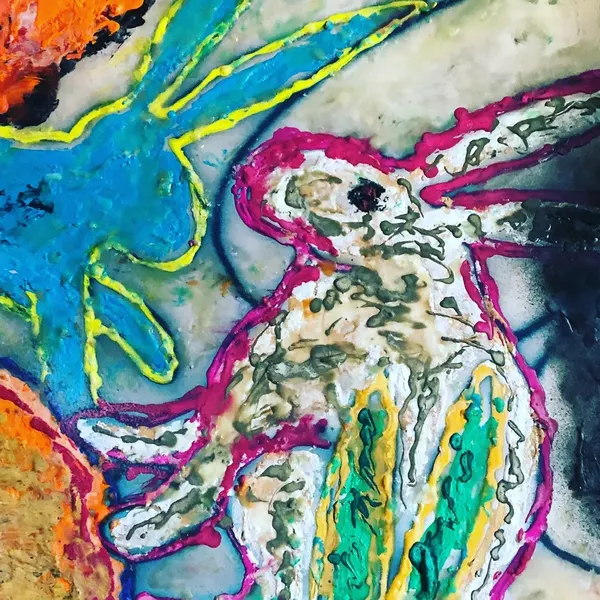
The two wax paintings look nothing alike. In Aliens, two pale figures are scraped into layers of black, grey and copper, and the surface reads like a weathered wall. In Rabbits, a white rabbit and a blue one are drawn in raised lines of pink, yellow and green on a pale ground, as if the colour had been piped on.
What thick paint looks like
Rabbits, above, shows what the wax does. The outlines stand up from the surface in ridges of pink, yellow and green, and the light catches them. Power of 3 and Richard Schlop are drip paintings, where poured and thrown paint pools and dries in raised skins.
Photographs flatten all of that. Texture is easier to judge in person, or in close photographs taken in raking light, which you can ask for when you inquire.
How collectors care for encaustic work
Care sheets agree on the basics, though their numbers differ, so follow the artist’s advice for any piece you buy.
- Keep it away from direct sun, heaters and hot cars. Sources give different heat limits.
- Avoid extreme cold, which can make the wax brittle and crack it.
- Handle it as little as possible, since oil from fingers builds up. A soft cloth, used gently, brings back the shine.
- For transport, cover the face with wax paper or glassine. Bubble wrap pressed directly on the surface can leave an imprint.
- Newer work can show a cloudy bloom in its first months while the wax cures.
Most sources say encaustic needs no varnish and no glass.
Acrylic and wax together
Care sheets treat encaustic as its own craft, with its own heated tools. Combining it with acrylic is a studio choice, so there is no single rule for how a mixed piece should be handled. Ask about care when you ask about the work itself.
Questions to ask about a painting
- Which materials does this piece use, and where is the wax?
- What are its dimensions, and is it on canvas, panel or paper?
- Is it signed, and where?
- How should it be hung, and how should it travel?
Photographing texture
If you are deciding from a screen, ask for a close photograph in raking light, where the ridges of thick paint show best. Ask for a view of the edges and back too. They show how the canvas or panel is made, and how the work will sit on a wall.
Where to look and ask
The paintings series shows each piece whole, with its label. When one raises a question about its materials, the inquiry page takes it in one message, and the piece is named for you if you came from its label.